2026 Best Medical Equipment Automation Trends for Buyers

Time:2026-09-08 Author:Sophia
0%

Medical equipment automation is moving from pilot projects into everyday clinical workflows. In 2026, buyers will assess more than speed, labor savings, or impressive demonstrations. They will examine validation evidence, cybersecurity controls, interoperability, maintenance requirements, and measurable patient benefits. How Automation Is Changing Medical Equipment is therefore a practical purchasing question, not merely a technology discussion.

Recent industry data supports this shift. The International Federation of Robotics reported strong growth in medical robot adoption, reflecting wider use in surgery, rehabilitation, laboratory operations, and hospital logistics. The World Health Organization’s Global Strategy on Digital Health 2020–2025 also emphasizes safe, equitable, and evidence-based digital transformation. Meanwhile, the U.S. Food and Drug Administration’s public database shows the expanding presence of artificial intelligence-enabled medical devices, especially in diagnostic imaging. These reports suggest a larger market, but not automatically a better one.

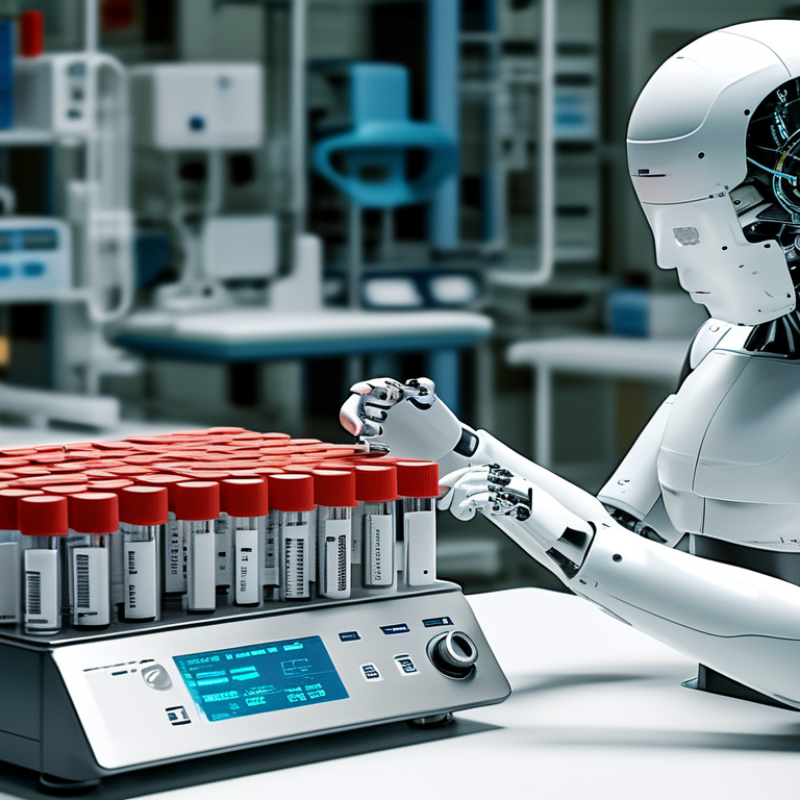
Automation is not a cure-all. That assumption deserves scrutiny. A robotic sample handler may process hundreds of tubes consistently, yet poor integration can create delays at the laboratory interface. A smart infusion platform may reduce manual checks, but weak training can introduce new risks. Buyers should request clinical evidence, total-cost projections, service response times, and clear human-override procedures. The strongest 2026 strategies will combine engineering discipline with frontline experience. Practical details matter: cleaner cable layouts, simpler interfaces, reliable alarms, and technicians who can repair systems without excessive downtime. The best investment may not be the most advanced machine. It may be the one staff can trust every day.
2026 Best Medical Equipment Automation Trends for Buyers

What Medical Equipment Automation Means in 2026

What Medical Equipment Automation Means in 2026

Medical equipment automation now means connected, validated workflows, not simply robotic movement. A modern line may scan components, adjust torque, record images, and flag deviations before release. It can also connect production data with maintenance and quality systems.

It is not a robot.

The workforce pressure is measurable. The World Health Organization projects a global health-worker shortage of 10 million by 2030. Automation can reduce repetitive inspection, documentation, and material-handling work. However, it should support skilled workers rather than remove judgment from safety-critical decisions. The International Federation of Robotics reported 541,302 industrial robot installations worldwide in 2023, showing strong adoption across manufacturing. Medical equipment buyers should examine whether that capability transfers safely to controlled production environments.

Compliance changes the purchasing question. From February 2026, the United States Quality Management System Regulation aligns medical-device quality requirements more closely with ISO 13485. Buyers therefore need audit trails, access controls, validation evidence, and clear change management. A faster machine without reliable records creates a slower investigation. That gap matters. Automation may also fail through poor data, awkward operator interfaces, or excessive integration costs. I would not automate a process until its failure modes are documented. The best 2026 investment is measurable, repairable, and understandable on a busy production floor.

Key Automation Technologies Shaping Medical Equipment

Medical equipment automation is moving beyond simple conveyor systems. Machine vision now checks labels, seals, dimensions, and surface defects before products leave a cleanroom. Collaborative robots can handle repetitive loading while technicians manage exceptions. The International Federation of Robotics reported 541,302 industrial robots installed worldwide in 2023, showing the scale of automation investment across manufacturing. Medical production remains highly regulated, so speed alone is not enough.

Artificial intelligence is also supporting predictive maintenance and process monitoring. Sensors can track vibration, temperature, pressure, and cycle time from sterilizers or assembly tools. The U.S. Food and Drug Administration reported more than 1,000 authorized AI-enabled medical devices by 2024, although many support clinical use rather than factory automation. Buyers should distinguish these categories carefully. Data quality matters.

Digital twins can simulate equipment changes before engineers alter a validated line. This helps test throughput, downtime, and operator access using virtual models. Automated guided vehicles may move trays between controlled areas, reducing unnecessary handling. The International Organization for Standardization highlights risk management, traceability, and validation as essential principles for medical-device production. These requirements can make integration slower than expected. That is not failure. It is a useful warning.

Some suppliers promise rapid returns, but results depend on clean data, skilled staff, and stable workflows. A vision system may detect a tiny crack, yet poor lighting can create false rejects. Buyers should request documented validation evidence, cybersecurity controls, service response times, and clear audit trails before approving investment.

How Automation Improves Safety, Accuracy, and Efficiency

Medical equipment automation is moving from isolated machines to connected, decision-supporting systems. The safety case is compelling: the World Health Organization reports that one in ten patients experiences harm in healthcare, while more than half of this harm is preventable. Automated identity checks, dose verification, and closed-loop monitoring can reduce avoidable manual slips. Clear alerts matter. Too many alerts create fatigue, however.

Accuracy improves when equipment captures readings consistently. A calibrated analyzer can record temperature, timing, and sample status without relying on hurried handwriting. The International Federation of Robotics reported nearly 15,000 medical robots installed worldwide in 2023, showing strong adoption of automated assistance. Buyers should examine validation records, sensor tolerances, cybersecurity controls, and audit trails. A fast machine is not necessarily a reliable machine.

Efficiency appears in small moments: fewer repeated entries, shorter setup times, and smoother handoffs between departments. Automation can also flag unusual results before a clinician reviews the full record. That support is useful, not decisive. Human oversight remains essential, especially when data is incomplete or equipment behaves unexpectedly. WHO guidance stresses governance, training, and continuous learning around digital health systems. Procurement teams should test failure modes in realistic workflows, not only during demonstrations. Some systems still require awkward workarounds. That weakness deserves attention.

2026 Best Medical Equipment Automation Trends for Buyers

How automation improves safety, accuracy, and efficiency

Published clinical evidence shows that barcode medication administration and computerized provider order entry can substantially reduce medication-related errors. Buyers should evaluate automation by its measurable effect on safety, workflow accuracy, and staff efficiency.

Sources: Poon et al., New England Journal of Medicine, 2010; Bates et al., Journal of the American Medical Informatics Association, 1998. Values represent reductions reported in the cited studies and are not brand-specific performance claims.

What Buyers Should Evaluate Before Choosing Automated Equipment

Buyers should start with the clinical task, not the machine’s feature list. Observe staff during a busy shift, including handoffs, cleaning, and unexpected interruptions. Ask whether automation reduces repetitive work without hiding important decisions from trained professionals. A fast cycle time means little if setup takes twenty minutes. Measure throughput, error rates, alarm frequency, and recovery time in realistic conditions. Test it live.

Before purchase, request documented validation methods, service records, software update policies, and operator training requirements. Check whether the system exchanges data reliably with existing records, instruments, and access controls. Cybersecurity deserves practical questions: Who receives alerts? How are permissions changed? What happens offline? Review cleaning surfaces, consumable use, noise, footprint, and accessibility for different users. A small design flaw can become a daily safety concern.

Total cost should include installation, calibration, downtime, training, maintenance, and eventual replacement. Request references from comparable care settings, not only curated success stories. Do not accept a polished demonstration as proof of routine performance. Run a limited pilot with clear acceptance criteria and frontline feedback. I would also document failure modes, because optimistic assumptions often survive procurement meetings. No evaluation is perfect. Even careful teams can miss workflow details. Honest gaps become useful when buyers assign owners, deadlines, and safeguards.

Future Developments and Adoption Considerations in Medical Automation

2026 Best Medical Equipment Automation Trends for Buyers

Medical automation is moving from isolated machines toward connected, adaptive workflows. The International Federation of Robotics reported 16,700 medical robots sold globally in 2023, a 36% annual increase. The next phase will combine robotic handling, computer vision, predictive maintenance, and decision support. FDA public data listed more than 1,000 authorized AI-enabled medical devices by 2024. That figure signals momentum, not readiness. WHO projects that one in six people globally will be aged 60 or older by 2030, increasing pressure on clinical capacity. Buyers should ask whether new systems exchange data safely with existing equipment and records. Interoperability, audit trails, and human override functions deserve contractual attention.

Future adoption will depend on measurable clinical and operational value. Include training hours, validation work, software updates, downtime, cybersecurity controls, and disposal costs. Facilities also need clean layouts. Automation may reduce repetitive lifting, yet poor interface design can shift work toward monitoring and troubleshooting. That hidden burden is easy to miss. Pilot studies should track error rates, turnaround time, staff workload, maintenance events, and patient-safety indicators. Use local baseline data. An impressive demonstration can still fail under peak demand, staffing gaps, or network outages. Some forecasts overstate adoption speed; reimbursement, regulation, and staff trust remain uneven across regions. Buyers should leave room for revision.

2026 Best Medical Equipment Automation Trends for Buyers - Future Developments and Adoption Considerations in Medical Automation

Buyer-oriented comparison of major medical equipment automation trends, expected 2026 relevance, measurable benefits, implementation requirements, and adoption risks.

Automation Trend Primary Medical Equipment Applications 2026 Buyer Relevance Expected Adoption Stage Typical Operational Benefit Key Data or Infrastructure Requirement Main Adoption Considerations Relevant Standards and Controls
AI-Assisted Imaging Workflow Automation Image acquisition quality checks, protocol selection, scan prioritization, anomaly detection, and radiology workflow support. Very High Established in selected workflows; expanding into regulated clinical decision-support functions. Reduced manual review effort, faster worklist prioritization, and improved consistency in repetitive image-analysis tasks. High-quality labeled datasets, interoperable imaging data, model monitoring, cybersecurity controls, and human review pathways. Buyers should verify intended use, clinical validation, false-negative controls, update procedures, explainability, and post-market monitoring. DICOM, HL7 FHIR where applicable, ISO 14971, IEC 62304, IEC 62366-1, and applicable medical-device software regulations.
Robotic Laboratory Automation Specimen sorting, aliquoting, liquid handling, sample transport, centrifugation, and automated result routing. Very High Mature in high-volume laboratories; increasing adoption in modular and flexible laboratory environments. Higher throughput, fewer repetitive manual steps, improved traceability, and lower specimen-handling variability. Barcode or equivalent identification, laboratory information system connectivity, validated interfaces, environmental monitoring, and preventive maintenance. Assess sample-type compatibility, exception handling, contamination prevention, downtime procedures, cleaning requirements, and integration with existing analyzers. ISO 15189, IEC 61010 series, ISO 14971, applicable in-vitro diagnostic requirements, and local laboratory accreditation rules.
Smart Medication Dispensing and Inventory Automation Unit-dose dispensing, medication storage, automated replenishment, barcode verification, and controlled access. Very High Established for inpatient, outpatient, and pharmacy workflows; broader integration with electronic medication records is expected. Fewer selection and counting errors, improved inventory visibility, faster replenishment, and stronger chain-of-custody records. Reliable patient and medication identification, electronic medication-record integration, audit trails, access management, and backup procedures. Evaluate medication safety logic, override governance, controlled-substance requirements, alarm usability, cybersecurity, and business continuity. ISO 14971, IEC 62304 when software is safety-relevant, IEC 62366-1, barcode standards, and applicable medication-management regulations.
Autonomous Mobile Robots for Internal Logistics Transport of sterile supplies, laboratory specimens, pharmacy items, linens, meals, and waste within healthcare facilities. High Growing deployment in large facilities; adoption depends strongly on building layout and workflow standardization. Reduced non-clinical transport workload, improved delivery traceability, and more predictable internal logistics. Facility maps, elevator and door integration, fleet-management software, indoor positioning, traffic rules, and secure access zones. Check corridor capacity, infection-control protocols, emergency override, human-robot interaction, charging strategy, and fallback transport procedures. ISO 13485 or applicable quality systems, ISO 14971, electrical safety requirements, machine-safety principles, and local occupational-safety rules.
Digital Twins and Predictive Maintenance Imaging systems, sterilizers, laboratory analyzers, surgical equipment, HVAC-supported clinical environments, and facility utilities. High Early-to-growing adoption, with the strongest value in equipment fleets that generate reliable operational data. Earlier fault detection, improved maintenance planning, reduced unplanned downtime, and better utilization of capital equipment. Machine telemetry, standardized asset identifiers, historical maintenance records, secure network connectivity, and validated alert thresholds. Buyers should distinguish predictive alerts from validated safety functions and define ownership of data, model performance, and service actions. ISO 55001 concepts for asset management, ISO 14971 where safety is affected, IEC 62443 principles, and cybersecurity risk-management practices.
Connected Medical Devices and Edge Computing Bedside monitors, infusion systems, ventilators, anesthesia equipment, patient monitoring hubs, and point-of-care devices. High Established connectivity in many facilities; edge processing is expanding where latency, resilience, or privacy is important. Near-real-time data availability, reduced manual transcription, improved alarm routing, and greater operational visibility. Reliable network segmentation, time synchronization, identity management, interoperability interfaces, local processing capacity, and secure updates. Assess alarm fatigue, network downtime behavior, compatibility with legacy systems, patch management, data ownership, and access logging. IEC 60601 series, IEC 80001-1, ISO 14971, HL7 FHIR where applicable, DICOM for imaging, and recognized cybersecurity guidance.
Automated Sterile Processing and Traceability Instrument washing, disinfection, sterilization-cycle monitoring, load tracking, packaging verification, and instrument availability management. High Mature for individual process steps; integrated end-to-end traceability remains a major development area. Improved process repeatability, stronger documentation, reduced search time, and better visibility of instrument status. Unique instrument or tray identification, cycle records, environmental sensors, validated cleaning processes, and integration with surgical scheduling. Confirm validated reprocessing parameters, biological and chemical indicator workflows, exception management, staff training, and manual recovery steps. ISO 17665, ISO 15883, ISO 17664, ISO 14971, applicable sterilization guidance, and local infection-prevention requirements.
Computer Vision for Safety and Quality Inspection Assembly inspection, packaging checks, device-position verification, PPE compliance, specimen identification, and environmental monitoring. High Growing adoption in controlled environments; clinical use requires stronger validation and governance. Faster inspection, improved detection of visible defects, reduced manual sampling, and more consistent documentation. Controlled lighting, representative image datasets, calibrated cameras, secure storage, defined acceptance criteria, and human escalation. Review sensitivity and specificity, bias across conditions, privacy implications, camera failure modes, and the consequences of missed defects. ISO 14971, IEC 62304 where software is regulated, IEC 62366-1, quality-system requirements, and applicable privacy regulations.
Flexible Collaborative Robotics Device assembly, packaging, kitting, loading and unloading, laboratory handling, and repetitive preparation tasks. High Growing in manufacturing and laboratory settings; suitability depends on task repeatability and risk assessment. Lower ergonomic burden, more consistent cycle times, and scalable automation for repetitive processes. Standardized work instructions, validated end effectors, force and speed limits, workstation sensors, and operator training. Assess safeguarding, sterile-area compatibility, changeover time, manual intervention, cleaning, validation after reconfiguration, and workforce acceptance. ISO 10218, ISO/TS 15066, ISO 14971, IEC 60204-1, and applicable occupational-health and machinery-safety requirements.
Remote Operations and Virtual Service Support Equipment diagnostics, software configuration, technical support, maintenance guidance, and service documentation. High Increasingly common for connected equipment; remote control of safety-critical functions requires strict authorization. Faster troubleshooting, fewer service visits, improved uptime, and better access to specialist expertise. Strong authentication, encrypted connections, session logging, role-based access, secure remote-update capability, and local override controls. Define permitted remote actions, customer approval requirements, service-level targets, incident response, data residency, and offline operation. IEC 81001-5-1, IEC 62443 principles, ISO 14971, secure-development practices, and applicable privacy and critical-infrastructure rules.
Generative AI for Technical and Clinical Operations Service-document search, maintenance guidance, workflow documentation, scheduling support, and structured administrative assistance. Medium to High Emerging; strongest near-term use is assistive and human-reviewed rather than autonomous clinical control. Faster information retrieval, reduced documentation time, and improved access to procedural knowledge. Curated source documents, retrieval controls, access permissions, output logging, evaluation datasets, and confidential-data safeguards. Control hallucinations, prohibit unsupported autonomous decisions, validate outputs, monitor model drift, and establish clear accountability. ISO 14971 where risk is introduced, IEC 62304 where applicable, privacy regulations, cybersecurity controls, and organizational AI governance.
Energy- and Resource-Efficient Automation Low-consumption imaging workflows, intelligent HVAC coordination, sterilization optimization, equipment sleep modes, and utility monitoring. Medium to High Growing adoption as healthcare organizations measure operating costs, resilience, and environmental performance. Lower energy and water consumption, reduced operating cost, and improved sustainability reporting. Submetering, equipment energy profiles, validated process parameters, facility-management integration, and baseline measurements. Ensure energy-saving modes do not compromise readiness, infection control, image quality, sterilization efficacy, or emergency availability. ISO 50001 concepts, ISO 14001 concepts, applicable electrical-safety requirements, and validated clinical-process specifications.
Buyer interpretation: Adoption stages describe the general maturity of the technology category rather than a guarantee for any individual product. Operational benefits depend on workflow design, validation, staff training, interoperability, cybersecurity, maintenance capability, and applicable regulatory approval. Standards listed are representative reference points and should be confirmed against the buyer’s jurisdiction and intended use.

FAQS

: How does automation improve medical equipment quality?

: Machine vision checks labels, seals, dimensions, and surface defects. It can catch tiny cracks before shipment. Poor lighting may still cause false rejects.

Can collaborative robots replace technicians?

They handle repetitive loading, tray movement, and simple assembly tasks. Technicians manage exceptions and unusual equipment behavior. Human judgment remains necessary.

What data can support predictive maintenance?

Sensors monitor vibration, temperature, pressure, and cycle time. These signals may reveal worn parts early. Dirty or incomplete data weakens predictions.

Are all AI-enabled medical systems suitable for factory automation?

No. Some systems support clinical decisions rather than production activities. Buyers should confirm the intended use, validation records, and data boundaries.

How can digital twins help equipment planning?

Digital twins simulate layout changes before engineers modify a validated line. They can test throughput, downtime, and operator access. Virtual results are not guarantees.

What should buyers check before approving automation?

Request validation evidence, cybersecurity controls, service response times, and audit trails. Review sensor tolerances and software update procedures. Details matter.

How can automation improve workplace safety?

Automated identity checks, dose verification, and monitoring can reduce manual slips. Clear alerts help. Too many alerts create fatigue.

What makes an automation pilot realistic?

Test peak demand, staff shortages, network outages, and equipment failures. Track errors, turnaround time, workload, maintenance events, and safety indicators. Demonstrations can look perfect. Operations rarely do.

What hidden costs should medical facilities consider?

Include training, validation, software updates, downtime, cybersecurity, maintenance, and disposal. Poor interface design may increase monitoring work. That burden is easy to miss.

What should future-ready systems provide?

They should exchange data safely with existing equipment and records. Require audit trails and human override functions. Leave room for revision.

Conclusion

Medical equipment automation in 2026 is transforming how healthcare devices are designed, operated, and maintained. How Automation Is Changing Medical Equipment can be seen through the growing use of artificial intelligence, robotics, sensor networks, machine vision, connected software, and predictive analytics. These technologies help devices perform repetitive tasks consistently, monitor operating conditions, support clinical workflows, and provide timely alerts when maintenance or intervention may be needed. As a result, automation can improve safety, accuracy, productivity, and resource utilization while reducing avoidable human error.

Before selecting automated equipment, buyers should evaluate reliability, ease of use, interoperability, cybersecurity, maintenance requirements, training needs, scalability, and total ownership costs. They should also consider whether the system supports regulatory compliance, data protection, transparent performance monitoring, and responsible human oversight. Future adoption will likely depend on practical integration with existing facilities, workforce readiness, flexible software updates, and clear evidence of long-term value. A careful, needs-based evaluation can help healthcare organizations adopt automation effectively while preserving quality, accountability, and patient-centered care.

Sophia

Sophia

Sophia is a dedicated marketing professional with an exceptional depth of knowledge about her company's products and services. With a keen understanding of market trends and customer needs, she crafts insightful blog posts that not only inform but also engage readers, enriching the company’s online......