How to Choose Reliable Medical Equipment Suppliers in China

Time:2026-11-10 Author:Sophia
0%

Choosing a medical equipment supplier in China is not a simple price comparison. A quotation may look attractive, yet the real test comes later: consistent production, clear records, and responsive support when a device needs attention. Buyers should look beyond polished catalogues and ask to see the factory, product specifications, quality records, and a sample device where practical.

The World Health Organization’s Global Atlas of Medical Devices 2017 describes roughly two million types of medical devices, grouped into about 7,000 generic categories. That scale makes product-specific checks essential. A certificate alone does not prove that every model, component, or production site has been assessed. Confirm that documents match the exact product and manufacturer. Check how the supplier handles inspection, traceability, complaints, and after-sales service. If the answers stay vague, pause.

Joseph M. Juran, a leading quality management expert, defined quality as “fitness for use.” His principle fits supplier selection: equipment must perform reliably in the setting where it will be used. A portable monitor, for example, should be assessed for its intended workload, accessories, and service needs—not just its brochure specifications. That matters.

This guide explores How To Choose Reliable Medical Equipment through practical checks on product fit, supplier capability, documentation, and communication. Independent verification can take time, and it may expose gaps in an otherwise impressive presentation. That is useful, though not always comfortable. Even careful checks cannot remove every risk, so keep reviewing supplier performance after purchase.
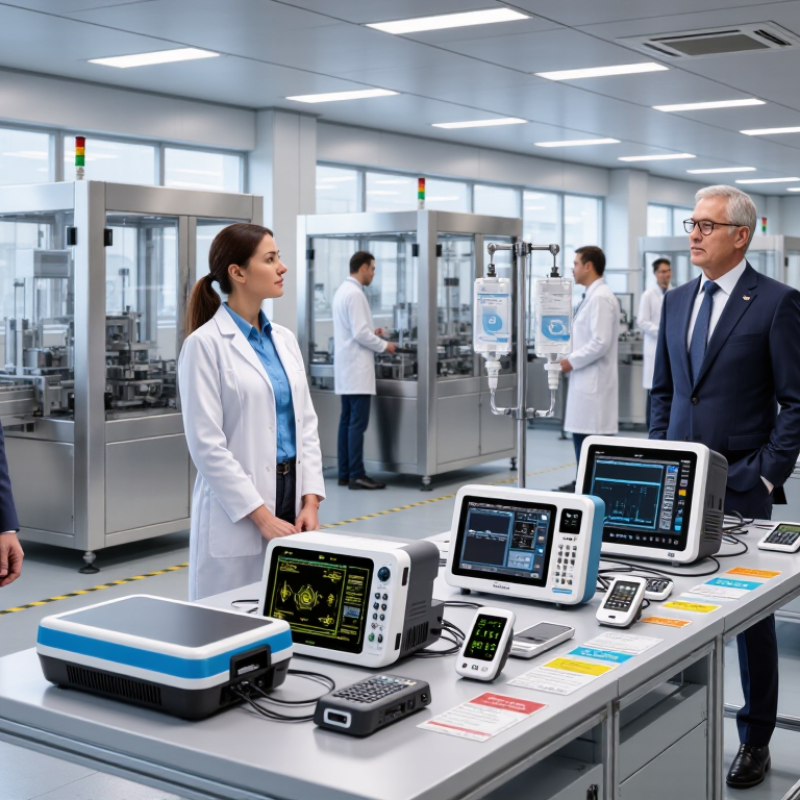
How to Choose Reliable Medical Equipment Suppliers in China

Define Your Medical Equipment Needs and Supplier Criteria

How to Choose Reliable Medical Equipment Suppliers in China

Define Your Medical Equipment Needs and Supplier Criteria

Before contacting suppliers, describe the equipment’s intended use, users, and operating environment. A patient monitor for a busy ward has different requirements from one used in a small clinic. List essential functions, measurement ranges, power needs, accessories, and expected daily workload. Include installation, staff training, maintenance, and replacement parts in your planning. Specific details make quotations easier to compare. Vague requests often produce vague answers.

Set clear supplier criteria before reviewing offers. Ask for product specifications, inspection records, user manuals, warranty terms, and service response times. Confirm how the supplier handles calibration, repairs, and spare-part availability. Request relevant quality-management documentation, then verify that it matches the product and facility requirements. A polished catalogue is not proof of dependable support. If a response avoids direct technical questions, pause and investigate further.

Verify Supplier Credentials and Regulatory Compliance

Before discussing prices, confirm who is legally responsible for the product. Ask for the supplier’s Chinese business licence, registered company name, manufacturing-site address, and a current ISO 13485 certificate. Check that the certificate covers the actual site and relevant device activities, then verify it with the issuing certification body. A neat PDF is not enough. Names and addresses should match across records.

For each device, request its Chinese regulatory classification and applicable NMPA registration or filing details. Confirm the registration holder, product model, and manufacturing site against official records; requirements vary by device category. The WHO’s 2017 Global Atlas of Medical Devices reported that 54% of surveyed countries had a national authority responsible for medical devices. That gap makes document checks more than paperwork. Ask for recent audit findings, corrective-action records, complaint handling procedures, and batch-traceability examples. Can the supplier trace one sample unit to its production and inspection records?

One detail is easy to miss. A valid quality certificate does not prove every shipment meets specifications. Compare a pre-shipment inspection report with agreed acceptance criteria, and check calibration records for test equipment. If records are incomplete, pause and ask for clarification. A supplier’s response can reveal as much as the documents. Even careful checks have limits, so record what you verified and when.

Assess Product Quality and Manufacturing Capabilities

A reliable medical equipment supplier should be able to show how product quality is built into daily production, not just describe it in a brochure. Ask for current product specifications, inspection criteria, and records showing how defects are handled. Check that certificates match the exact product and manufacturing site, and verify them with the issuing organization where possible. Details matter.

Look closely at the factory’s actual processes. Are incoming materials checked against defined requirements? Are measuring tools calibrated, and can staff trace a finished unit to its production batch? For equipment requiring controlled assembly, ask how the environment is monitored and how deviations are recorded. A short video call can reveal practical details: labeled workstations, protected components, and inspection steps that operators can explain clearly.

Manufacturing capability also means repeatability. Request samples, then compare them with units from a later production run; small differences in fit, finish, or documentation deserve a question. Discuss capacity, maintenance schedules, and plans for handling production delays. A polished factory tour can still leave gaps, and one sample cannot prove long-term consistency. I would treat missing records as a reason to investigate further, rather than assume that a confident sales answer is evidence.

Evaluate Communication, Logistics, and After-Sales Support

Reliable medical equipment suppliers in China should communicate clearly before payment, not only after an order is placed. Ask for a named contact, written response times, clear product specifications, and advance notice of production changes. During evaluation, request a sample service record and a realistic escalation path for urgent faults. Small details matter: a reply that identifies a component by its exact part number is more useful than a vague promise to “check.” The World Bank’s 2023 Logistics Performance Index assesses 139 economies across areas including tracking, logistics competence, and timeliness. These measures are useful context, but a country-level score cannot guarantee one supplier’s performance.

Logistics needs the same scrutiny. Confirm shipping terms, protective packaging, document responsibilities, shipment tracking, and what happens if a delivery is delayed or damaged. For temperature-sensitive or delicate devices, ask how conditions are monitored and recorded. Then examine after-sales support: installation guidance, user training, spare-parts availability, warranty exclusions, and access to qualified technicians. UNCTAD’s Review of Maritime Transport 2024 reported that seaborne trade grew by 2.4% in 2023, while disruption and route changes remained practical shipping concerns. Build buffer time into plans. It is easy to underestimate this.

Tips: Ask the supplier to demonstrate a support request using a real device scenario. Record who responds, what information they request, and how quickly they propose a fix. Keep the test simple, and keep the evidence. One unanswered question is still a warning sign.

How to Choose Reliable Medical Equipment Suppliers in China - Evaluate Communication, Logistics, and After-Sales Support

Evaluation area What to assess Evidence to request or check Positive indicators Warning signs Suggested weight
Communication Clarity, response consistency, technical understanding, and ability to document requirements. Written quotations, product specifications, answers to technical questions, and records of agreed changes. Answers are specific and consistent; specifications and commitments are confirmed in writing. Vague answers, conflicting specifications, or pressure to proceed before requirements are clear. 20%
Regulatory documentation Whether documents match the product, intended market, and applicable regulatory requirements. Relevant declarations, certificates, test reports, labeling information, and device details; verify documents with the issuing body or regulator where possible. Documents are current, traceable, and consistent with the exact model and intended use. Documents are incomplete, cannot be verified, or refer to a different product or model. 20%
Logistics and delivery Shipping arrangements, export documentation, packaging, lead-time assumptions, and delivery coordination. Written delivery schedule, packing details, shipping documents, insurance terms, and responsibilities for customs clearance. Responsibilities and delivery terms are clearly defined; timelines allow for production, transit, and clearance. Unclear shipping responsibilities, unsupported delivery promises, or missing documentation plans. 15%
After-sales support Warranty terms, response process, repair options, spare parts, and technical assistance. Written warranty policy, service contact process, parts availability information, and escalation procedure. Support scope and exclusions are documented; service channels and parts arrangements are explained before purchase. Warranty terms are only verbal, service responsibilities are unclear, or essential parts are not addressed. 20%
Quality control and traceability Inspection procedures, product identification, and handling of nonconforming products. Inspection records or plans, serial or lot identification details where applicable, and a documented complaint or corrective-action process. Inspection steps and product records are available and correspond to the goods being supplied. No clear inspection process or inability to explain how product issues are investigated. 15%
Commercial terms Quotation detail, payment milestones, change control, and agreed product configuration. Itemized quotation, purchase specifications, payment terms, and written approval process for changes. Costs, scope, and payment conditions are transparent and consistent across written documents. Unexpected charges, changing product details, or payment requests that differ from agreed terms. 10%
Total suggested evaluation weight 100%

Suggested weights are an evaluation framework, not supplier performance data. Adapt them to the product, destination market, and purchasing requirements. Verify regulatory obligations with the relevant authorities or qualified compliance professionals.

Compare Samples, Pricing, and Contract Terms

When comparing medical equipment suppliers in China, request samples that match the quoted model and configuration. Check the housing, labels, connectors, and included accessories against the specification sheet. For powered equipment, ask how the sample was tested and what records are available. Looks matter. But a polished sample does not prove that every production unit will be consistent. Where practical, agree on measurable acceptance criteria before ordering, such as dimensions, included components, or test results. Keep notes and photographs so your team can compare later deliveries with the approved sample.

Compare more than the unit price. Include packaging, shipping, inspection, spare parts, and any translation or setup costs in your estimate. Ask suppliers to explain differences between quotations in writing. A lower price may reflect a different configuration, warranty period, or delivery schedule. Get it in writing. The contract should identify the exact model, specifications, quantity, delivery dates, payment milestones, warranty coverage, and process for handling defects or changes. Read the terms carefully, especially who pays for rework and how acceptance is recorded. A small mismatch can become an expensive distraction. I would still allow room for questions; a rushed comparison can overlook details your team will later wish it had checked.

FAQS

What should I define before contacting suppliers?

State the device’s use, users, and setting. List functions, measurement ranges, power needs, accessories, and daily workload. Include training, installation, maintenance, and replacement parts. Be specific.

How can I assess a supplier’s technical reliability?

Request specifications, inspection records, manuals, warranty terms, and service response times. Ask how calibration, repairs, and spare parts are handled. Verify that quality documents match the product. A glossy catalogue proves little.

What communication signs should I look for?

Ask for a named contact, written response times, and notice of production changes. Test a support request using a realistic device fault. A part number beats a vague promise. Keep the evidence.

What logistics details should I confirm?

Confirm shipping terms, protective packaging, tracking, and document responsibilities. Ask what happens if a shipment is delayed or damaged. For delicate devices, check how handling conditions are recorded. Allow buffer time. It gets underestimated.

How should I compare product samples?

Match each sample to the quoted model and configuration. Check labels, connectors, housing, and accessories against the specification sheet. Ask for test records for powered equipment. A polished sample is not enough.

How can I compare quotations fairly?

Compare the same specifications across offers. Add packaging, shipping, inspection, spare parts, translation, and setup costs. Ask for written explanations of price differences. A low price may hide a mismatch.

What should the contract state?

Record the exact model, specifications, quantity, delivery dates, and payment milestones. Define warranty coverage and how defects or changes are handled. Clarify who pays for rework and how acceptance is recorded. I’d still check twice.

How can I prepare for after-sales needs?

Confirm installation guidance, staff training, technician access, and common spare-part availability. Ask who provides local servicing and how quickly parts can arrive. Teams sometimes remember training too late. Worth checking early.

Conclusion

How To Choose Reliable Medical Equipment suppliers in China by first defining the products, technical specifications, intended use, and service requirements your organization needs. Create clear selection criteria for comparing suppliers, then verify their business credentials, relevant certifications, and ability to meet applicable regulatory requirements. Do not rely on claims alone; request supporting documents and confirm that they match the products being offered.

Next, assess product quality and manufacturing capabilities by reviewing quality-control procedures, production capacity, and sample performance. Consider how promptly and clearly the supplier communicates, whether shipping arrangements suit your timeline, and what after-sales support is available for training, maintenance, or warranty issues. Compare samples, full pricing, delivery terms, and contract conditions before making a decision. A careful, documented evaluation can help you choose a dependable supplier, reduce purchasing risks, and build a practical long-term working relationship.

Sophia

Sophia

Sophia is a dedicated marketing professional with an exceptional depth of knowledge about her company's products and services. With a keen understanding of market trends and customer needs, she crafts insightful blog posts that not only inform but also engage readers, enriching the company’s online......