How Healthcare Systems Upgrade Medical Technology in China?

Time:2026-10-03 Author:Madeline
0%

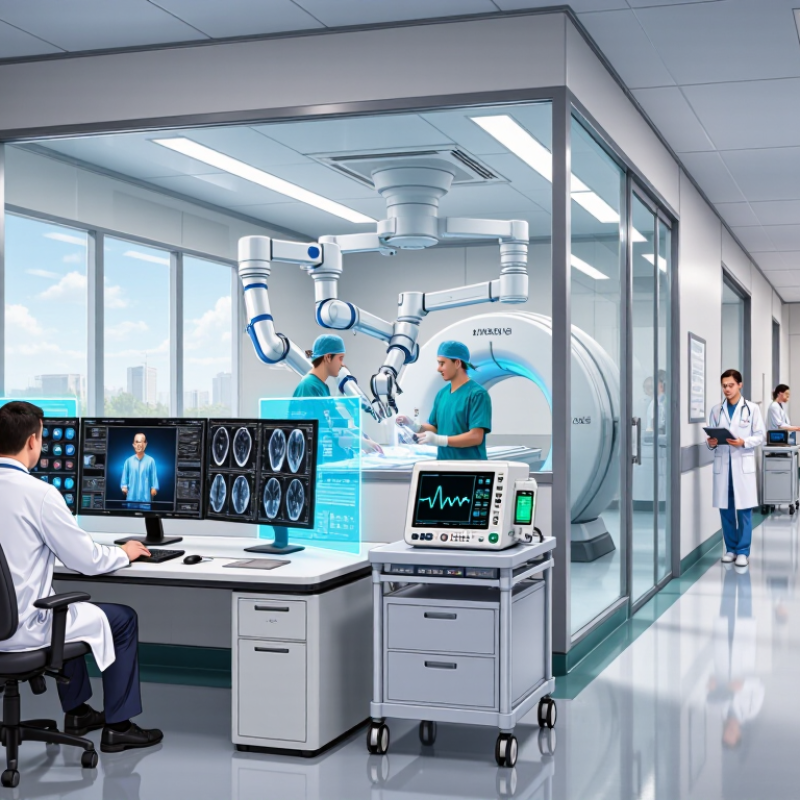
China’s healthcare system is upgrading medical technology at remarkable speed. Large hospitals now deploy robotic surgery, cloud-based imaging, artificial intelligence, and connected monitoring devices. In a busy tertiary hospital, a radiologist may review scans on an integrated workstation while clinicians access the same record across departments. These changes can shorten queues and support earlier diagnosis.

However, How Healthcare Systems Upgrade Medical Technology involves more than purchasing advanced equipment. Hospitals must evaluate clinical value, data security, interoperability, staff training, maintenance, and long-term costs. A modern MRI machine is not useful if technicians lack training or rural facilities cannot afford repairs. County hospitals also need dependable networks, specialist support, and clear referral pathways. The upgrade must reach patients outside major cities.

Eric Topol, a physician and leading digital medicine researcher, wrote, “The future of medicine is the consumer.” His observation highlights a crucial shift. Patients increasingly expect understandable results, remote consultations, safer treatment, and greater control over their health information. Technology should serve these expectations, not merely decorate hospital brochures.

China’s progress remains uneven. Some pilot programs look impressive but struggle to scale. Data systems may not communicate smoothly. Clinicians may also distrust automated recommendations when explanations are unclear. These weaknesses deserve honest attention. A reliable strategy combines evidence from clinical practice with careful regulation, transparent procurement, and continuous evaluation. The real measure of success is not how advanced a device appears. It is whether patients receive safer, faster, and more equitable care.

How Healthcare Systems Upgrade Medical Technology in China?

Healthcare Technology Needs Assessment in China

How Healthcare Systems Upgrade Medical Technology in China?

Healthcare technology needs assessment in China should begin with clinical pressure, not equipment catalogs. The National Health Commission reported 1.07 million medical institutions in 2023. It also recorded more than 12 million hospital beds nationwide. These figures show scale, but not readiness. A county hospital may have advanced imaging equipment, yet lack trained technicians, stable networks, or maintenance support. The assessment must examine patient volume, disease patterns, staffing, electricity quality, data interoperability, and repair time.

The demand is uneven. Large urban hospitals often need integrated platforms, safer surgical systems, and faster diagnostic workflows. Smaller facilities may gain more from portable ultrasound, remote consultation, and reliable laboratory devices. The 2023 China Health Statistics Yearbook indicates continued growth in healthcare resources, while the World Health Organization’s Global Strategy on Digital Health 2020–2025 stresses governance, cybersecurity, and workforce capability. Technology alone does not create better care. Sometimes, it creates another queue.

A practical review can follow one patient journey. How long does registration take? Where are repeat tests caused by disconnected records? Can nurses use the system during a crowded night shift? Procurement teams should measure total ownership cost, training hours, downtime, and clinical outcomes. A device with impressive specifications may fail in daily practice. That possibility deserves honest attention. Assessment should be repeated after six and twelve months, because hospital needs change faster than many procurement plans.

Government Policies and Funding for Medical Technology Upgrades

How Healthcare Systems Upgrade Medical Technology in China?

Government policy is reshaping how Chinese hospitals replace aging medical equipment. The 14th Five-Year Plan prioritizes high-end medical devices, digital hospitals, and stronger domestic innovation. In 2024, national equipment-renewal policies encouraged local governments to support upgrades in hospitals, laboratories, and imaging departments. Funding may combine fiscal subsidies, special bonds, hospital budgets, and policy-based lending. The channels are diverse.

The China Association for Medical Devices Industry estimated China’s medical device market at more than RMB 1 trillion in recent years. Meanwhile, the National Bureau of Statistics reported national research and development spending of RMB 3.33 trillion in 2023, equal to 2.64% of GDP. These figures show substantial innovation capacity. Yet healthcare funding is not distributed evenly. County hospitals may still struggle to purchase advanced scanners, maintain them, or train staff. A new machine is not enough.

Practical upgrades often begin with a needs assessment. Hospital managers compare patient volume, downtime, maintenance costs, and clinical outcomes before applying for funds. The National Health Commission’s health statistics also show China’s expanding healthcare network, increasing pressure for efficient equipment use. Procurement rules increasingly consider performance and lifecycle costs, not only purchase prices. This shift remains incomplete. Some projects still reward visible construction over daily usability. Better data sharing, transparent evaluation, and long-term maintenance budgets could make public funding more reliable.

Hospital Procurement and Technology Evaluation Processes

How Healthcare Systems Upgrade Medical Technology in China?

Hospital Procurement and Technology Evaluation Processes

In China, hospital technology upgrades usually begin with a clinical problem, not a product catalogue. Doctors, nurses, engineers, and finance officers define the need together. A county hospital may focus on reliable imaging, while a large urban center may require faster data integration. The context matters.

Procurement teams compare clinical value, safety, compatibility, training, maintenance, and total ownership costs. Technical specifications alone are insufficient. Evaluation committees review regulatory documentation, cybersecurity controls, cleaning requirements, and service response plans. They may invite suppliers to demonstrate equipment using realistic patient-care scenarios. Pilot testing can reveal hidden issues, such as crowded cables, confusing alerts, or slow reporting workflows.

Evidence should guide the decision. Hospitals can examine published studies, internal outcomes, user feedback, and failure records. Independent clinical specialists strengthen the review. Financial officers also assess replacement parts, staff training, energy use, and downtime. A lower purchase price may create higher costs later.

Not every evaluation is perfect. Busy clinicians may score familiar equipment too generously. A short pilot may miss problems that appear after months of use. Rural facilities may also face staffing and maintenance limits that urban tests overlook. Reviewers should record these weaknesses openly and revisit performance after installation. Procurement is not a single signature. It is an ongoing responsibility shared by the hospital, users, and technical teams.

How Healthcare Systems Upgrade Medical Technology in China? - Hospital Procurement and Technology Evaluation Processes
No. Procurement Stage Key Decision Dimension Typical Hospital Activity in China Required Evidence or Data Main Output
1 Clinical Need Identification Patient demand and service capacity Clinical departments submit demand based on disease burden, waiting times, current equipment utilization, service gaps and planned specialty development. Procedure volume, utilization rate, referral data, current equipment age, downtime records and unmet clinical needs. Documented clinical demand and preliminary equipment proposal
2 Internal Demonstration and Feasibility Review Clinical value and operational feasibility The clinical, medical engineering, finance, infection-control and information-technology teams review the proposed technology before formal procurement. Clinical application scenarios, staffing requirements, room specifications, utilities, workflow impact and cybersecurity considerations for connected systems. Feasibility assessment and technical requirement draft
3 Regulatory Qualification Check Legal market access and compliance The hospital verifies the applicable medical-device classification, registration or filing status, product specifications and required certificates under the national medical-device regulatory framework. National medical-device registration or filing information, product technical requirements, operating instructions, test reports and supplier qualifications. Qualified supplier and compliant product shortlist
4 Budget and Investment Approval Affordability and financial sustainability The proposed purchase is reviewed against the hospital budget, capital-investment plan, departmental priorities and expected service benefits. Acquisition cost, installation cost, consumables, maintenance, training, room renovation, energy use and expected annual utilization. Approved budget and investment justification
5 Procurement Route Selection Transparency and purchasing efficiency Depending on funding source, product category and local rules, the hospital may use public tendering, competitive negotiation, inquiry-based procurement, framework purchasing or an authorized centralized platform. Estimated contract value, procurement category, funding source, local procurement requirements and applicable tender documents. Approved procurement method and tender plan
6 Technical Specification Development Functionality and fair competition Requirements are written around clinical functions, performance and safety rather than restricted brand-specific descriptions. Mandatory technical parameters, performance tolerances, compatibility requirements, installation conditions, warranty terms and service-level requirements. Technical specification and evaluation criteria
7 Supplier Qualification and Tender Review Compliance, capability and commercial terms A procurement committee or authorized evaluation group reviews submitted documents and compares eligible proposals according to the published tender rules. Legal business credentials, authorization documents, registration information, delivery capability, after-sales resources, quotation and contract deviations. Compliant bids and evaluation record
8 Multi-Criteria Technology Evaluation Value for money and clinical performance Evaluation commonly combines technical compliance, clinical usefulness, safety, usability, service support and price. The exact scoring method is defined in the procurement documents and may differ by project. Performance data, clinical evidence, demonstration results, user feedback, total cost of ownership and lifecycle-service commitments. Ranked evaluation results and recommendation
9 Approval, Contract and Price Control Governance and contractual risk The authorized body confirms the award, completes required public-procurement procedures where applicable and signs a contract covering delivery, acceptance, payment and service obligations. Award notice, contract price, delivery schedule, acceptance criteria, warranty period, maintenance response time and penalties for non-performance. Approved award and enforceable purchase contract
10 Delivery, Installation and Acceptance Operational readiness and safety Medical engineering staff verify delivered equipment, installation conditions, calibration, accessories, documentation and performance before final acceptance. Packing list, acceptance test results, calibration records, safety checks, user training records and asset-registration information. Signed acceptance report and asset record
11 Clinical Implementation User adoption and workflow integration The hospital establishes operating procedures, trains relevant staff and integrates the technology with clinical, maintenance and information-management workflows where required. Training completion, standard operating procedures, connectivity tests, access controls, incident-reporting procedures and utilization plans. Go-live authorization and operating procedures
12 Post-Purchase Performance Review Outcome measurement and lifecycle management Performance is monitored during the service lifecycle to support maintenance, renewal, replacement or future procurement decisions. Utilization rate, uptime, failure frequency, maintenance cost, turnaround time, clinical output, user satisfaction and patient-safety incidents. Performance dashboard and lifecycle decision
Evaluation note: There is no single nationwide scoring formula for every hospital technology purchase in China. Evaluation weights, approval thresholds and procurement routes may vary according to hospital level, funding source, equipment category, local regulations and the specific tender documents.
Regulatory context: The process is generally aligned with China’s medical-device regulatory framework, government-procurement rules where applicable, hospital internal-control requirements and local public-resource or centralized-procurement procedures.

Implementation, Training, and Integration of New Medical Equipment

Upgrading medical technology in China starts with a clear clinical need, not a catalogue of new devices. A hospital team should review patient volume, workflow delays, maintenance capacity, and local regulatory requirements. It can map a patient journey from registration to discharge, noting where equipment may reduce waiting or improve diagnosis. The first schedule is rarely right. Pilot use in one department exposes hidden problems, such as limited sockets, crowded rooms, or incompatible data formats.

Training must be practical and role-specific. Physicians need supervised sessions using realistic cases, while nurses require practice with preparation, cleaning, alarms, and emergency procedures. Technical staff should learn calibration, cybersecurity controls, fault reporting, and preventive maintenance. Short demonstrations are not enough. Competency checks, return demonstrations, and refresher sessions create stronger evidence of readiness. Staff feedback should be recorded, even when it challenges the original plan.

Integration requires cooperation between clinical, engineering, information technology, and management teams. New equipment should exchange essential data with existing hospital systems through secure, approved interfaces. During the transition, teams can compare device readings with established methods and investigate discrepancies. Downtime procedures must remain available on paper. Small failures matter. A misplaced cable or unclear alert can interrupt care. Some hospitals may underestimate training time, and that is a serious weakness worth correcting before wider deployment.

Regulation, Safety Monitoring, and Future Development Trends

How Healthcare Systems Upgrade Medical Technology in China?

China’s medical technology upgrade is becoming a governance project, not merely a procurement exercise. The State Council’s 2021 Medical Device Regulation strengthens lifecycle supervision. Manufacturers and hospitals now share clearer safety duties. The NMPA approved 61 innovative medical devices in 2023, according to its annual report. Faster approval helps patients. Yet approval does not guarantee universal clinical value. A device may perform well in trials but struggle in a crowded ward.

38,355
The National Health Commission counted hospitals in 2023.

Safety monitoring must continue after installation. Hospitals should track calibration, maintenance, operator training, and unusual patient outcomes. The National Health Commission counted 38,355 hospitals in 2023. This scale makes consistent reporting difficult. Some facilities still record incidents unevenly. That weakness deserves more attention. Unique Device Identification, electronic records, and regional reporting platforms can connect one device to its full use history. The NMPA’s national adverse-event monitoring reports show sustained growth in reporting activity, reflecting wider surveillance coverage rather than automatic safety improvement.

Future development will depend on evidence, interoperability, and practical training. The China Association of Medical Device Industry estimated the domestic market at about RMB 1.1 trillion in 2023. Investment is rising, but replacement alone is not modernization. Hospitals need outcome data from ordinary wards, not only specialist centers. Artificial intelligence may support imaging and early warnings, while human review remains essential. The harder question is unresolved: who audits algorithms when clinical conditions change? Real-world evidence, transparent evaluation, and periodic recalibration should guide the next upgrade cycle.

FAQS

What usually starts a hospital technology upgrade in China?

A clinical problem usually starts the process. Teams may target long imaging waits, slow reporting, or poor data sharing. A product catalogue is not enough.

Who participates in evaluating new medical equipment?

Doctors, nurses, engineers, finance officers, and managers usually review it together. Each group notices different risks. That balance is useful.

What factors do hospitals consider before purchasing equipment?

Hospitals assess clinical value, safety, compatibility, training, maintenance, and total ownership costs. They also review cybersecurity, cleaning needs, service response, and regulatory documents. A low purchase price may become expensive later.

Why are pilot tests important?

Pilot tests reveal practical problems before wider installation. A crowded room may lack sockets. Cables may block movement, or alerts may confuse users. Short pilots still have limits.

How should hospital staff receive training?

Training should match each person’s role. Physicians practice realistic cases. Nurses rehearse cleaning, alarms, preparation, and emergency steps. Technical staff learn calibration, fault reporting, cybersecurity, and maintenance. Brief demonstrations are not enough.

How can new equipment connect with existing hospital systems?

Clinical, engineering, information technology, and management teams should plan integration together. Secure, approved interfaces should exchange essential data. During transition, staff can compare readings with established methods. Paper downtime procedures should remain available.

How should hospitals monitor safety after installation?

Hospitals should track calibration, maintenance, training, unusual outcomes, and equipment incidents. They should connect each device with its use history when possible. Reporting is still uneven in some facilities. That weakness needs attention.

Does regulatory approval prove that equipment will work well everywhere?

No. Approval confirms required review, not universal clinical value. Equipment may perform well in trials but struggle in a crowded ward. Rural hospitals may face different staffing and maintenance limits. Real-world evidence matters more than assumptions.

Conclusion

How Healthcare Systems Upgrade Medical Technology in China involves a structured process that begins with assessing healthcare needs, disease patterns, patient demand, and gaps in existing equipment. Government policies, public funding, and regional development plans help hospitals determine which technologies should be prioritized. During procurement, hospitals typically compare clinical value, safety, reliability, total cost, and compatibility with current systems. Technology evaluation also considers medical staff requirements and long-term maintenance.

After equipment is selected, successful implementation depends on installation, staff training, workflow redesign, data integration, and continuous technical support. Hospitals must ensure that new systems work effectively with electronic records and other clinical platforms while protecting patient information. Regulation and safety monitoring remain essential throughout the equipment’s life cycle, including approval, quality checks, performance reviews, and incident reporting. Looking ahead, healthcare systems are likely to focus on digital integration, intelligent diagnostics, remote care, cost efficiency, and equitable access, while maintaining strict standards for safety, clinical effectiveness, and responsible innovation.

Madeline

Madeline

Madeline is a dedicated marketing professional with a wealth of expertise in our company's core offerings. With a keen understanding of the industry, she brings a unique perspective to her role, consistently delivering high-quality content that highlights the superior aspects of our products. As......