Medical devices now move sensitive information across hospitals, cloud platforms, laboratories, and national borders. A connected infusion pump, imaging system, or patient monitor may transmit records within seconds. That speed improves care, but it also expands the security surface. Global buyers therefore need more than a product brochure. They need evidence that protects data throughout its operational life.
Dr. Suzanne Schwartz, former Associate Director for Science and Strategic Partnerships at the FDA’s Center for Devices and Radiological Health, stated, “Medical device cybersecurity is a shared responsibility between stakeholders, including health care facilities, patients, providers and manufacturers.” Her observation remains practical. No single department can secure a device alone. Procurement teams must examine encryption, identity controls, software updates, vulnerability reporting, audit logs, and supplier access. They should also ask where data is stored, who can retrieve it, and how quickly incidents are disclosed.
This guide explores How To Ensure Medical Device Data Security for global buyers. It connects technical safeguards with purchasing decisions. A secure device should support strong authentication, controlled remote maintenance, network separation, and tested recovery procedures. Buyers should request clear security documentation before signing contracts. They should also verify performance after installation, not only during evaluation.
Reality is messier. A checklist can miss human mistakes, outdated credentials, or an overlooked third-party connection. That deserves reflection. Security is ongoing work, not a one-time certificate. Regular reviews, staff training, and honest supplier communication create stronger protection. The goal is simple: preserve patient trust while keeping essential medical services available, accurate, and resilient.
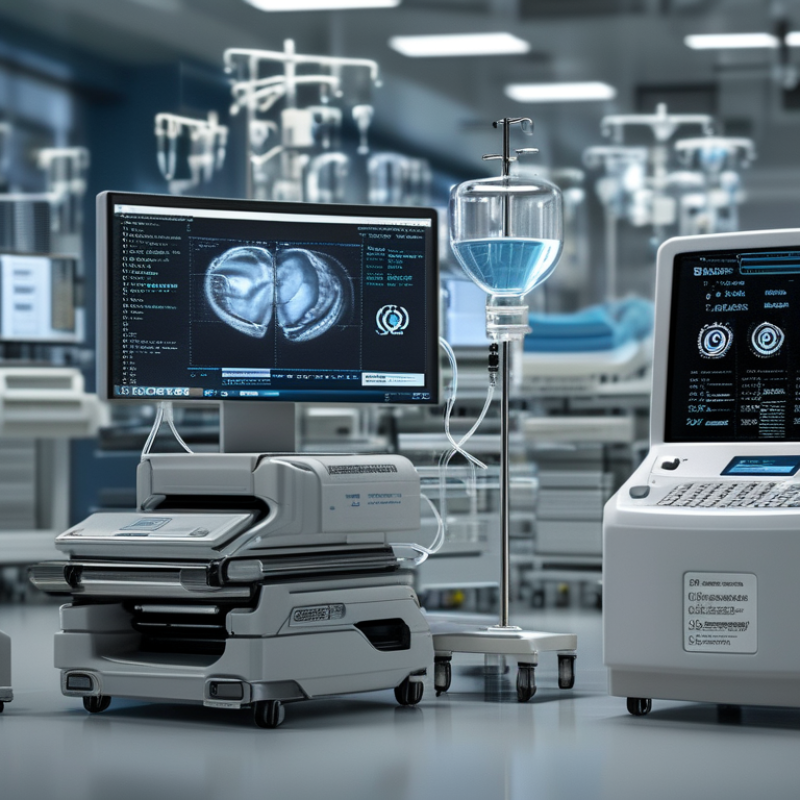
Medical device data security is the protection of information created, stored, or transmitted by a medical device. This includes patient readings, user details, device settings, diagnostic images, and maintenance records. It also covers the device itself, connected software, cloud services, and hospital networks. In practice, security protects confidentiality, accuracy, and availability. A glucose monitor that displays altered results can create serious risks. A locked system can delay care.
Effective protection begins with secure design. Devices should use strong authentication, encryption, controlled permissions, and timely security updates. Logs should record unusual access, failed sign-ins, and unexpected data transfers. Security teams also need plans for lost devices, damaged servers, and compromised accounts. Small details matter. Default passwords should not remain active. Unused connections should be disabled. Staff training is equally important because human mistakes often bypass technical controls.
Global buyers should examine how data moves across borders and between suppliers. Ask where information is stored, who can access it, and how incidents are reported. Request evidence of risk assessments, update procedures, testing, and supplier oversight. Independent audits can increase confidence, but they do not prove perfect protection. No system is flawless. A device may meet technical requirements today and become vulnerable after a new threat appears. That uncomfortable gap requires continuous monitoring, honest communication, and regular review.
Why Ensure Medical Device Data Security for Global Buyers?
Global buyers face security risks that local purchasing teams may not see. A connected medical device can transmit patient identifiers, imaging files, and usage logs across several countries. Each transfer creates another exposure point. Different privacy rules, retention periods, and breach-reporting duties can complicate one response plan.
The 2024 Cost of a Data Breach report placed healthcare’s average breach cost at $9.77 million, the highest among surveyed industries. The 2024 Data Breach Investigations Report recorded 1,710 healthcare incidents, with 1,378 involving confirmed data disclosure. These figures show the pressure on hospitals and distributors. Yet they do not fully capture disrupted treatment, delayed procurement, or damaged patient trust.
Global buyers also depend on unfamiliar distributors, cloud platforms, and maintenance contractors. A technician may access a device remotely from another region. A forgotten account can become the weakest link. Weak translation can make security instructions unclear. That is not a minor issue.
Practical evaluation should cover encryption, access logs, secure updates, vulnerability reporting, and supplier controls. Buyers should ask where data is stored and who can retrieve it. They should also test offline procedures when connectivity fails. Paper plans look reassuring.
They may fail under pressure. A device may meet technical requirements but still create operational risk through poor support or unclear ownership. Independent assessments and documented incident experience provide stronger evidence than marketing claims.
Global buyers face higher security exposure because medical devices exchange sensitive patient data across hospitals, cloud platforms, suppliers, and cross-border service networks. The healthcare sector recorded the highest average data breach cost among major industries in the 2024 global benchmark, making strong device security, access control, encryption, and supplier risk management essential.
Source: 2024 global data breach cost benchmark. Values represent average breach costs in USD millions by industry.
For global medical device buyers, data security is an operational requirement, not a technical preference. A breach can expose patient records, device identifiers, service credentials, and shipment details. The damage often starts quietly. A stolen credential may interrupt remote monitoring before unusual network traffic is noticed. Clinical teams can lose access to dashboards, alerts, or maintenance histories. In a busy ward, even a short outage can delay decisions and increase manual work.
Manufacturers and distributors may pause device configuration, software updates, or field service visits. Engineers must verify logs, isolate affected systems, and rebuild trusted access. Each step consumes time and skilled labor. Buyers may also face delayed deliveries when inventory or customs data becomes unreliable. One missing record can create duplicate orders, incorrect serial-number tracking, or unnecessary recalls. These outcomes are not theoretical. Operational reviews often show that small access weaknesses spread across connected systems.
Protection begins with practical controls: unique accounts, multi-factor authentication, encrypted data, tested backups, and restricted supplier access. Security reviews should examine the entire device lifecycle, from factory setup to decommissioning. Independent testing and clear incident reporting provide useful evidence, but paperwork alone is not enough. Plans can fail when staff cannot find a current contact list during an outage. That uncomfortable gap deserves attention. Global buyers should ask how quickly access can be revoked, how recovery is tested, and who makes decisions when clinical operations cannot wait.
Why Ensure Medical Device Data Security for Global Buyers?
Cross-border medical device data is governed by several overlapping rules, not one global standard. The EU General Data Protection Regulation treats patient information as sensitive personal data. It requires a lawful basis, clear notices, limited collection, and strong safeguards. International transfers may need approved contractual protections or another valid mechanism. The United Kingdom applies similar requirements through its own privacy framework.
Other markets add different conditions. In the United States, the Health Insurance Portability and Accountability Act may apply when device data is handled by covered healthcare organizations or their service providers. It does not cover every device manufacturer or every data type. China’s Personal Information Protection Law can require consent, security assessments, or other controls before certain data leaves the country. Brazil and several other jurisdictions impose comparable privacy duties, but their definitions and transfer procedures differ.
Medical device rules also matter. European device legislation expects cybersecurity, risk management, post-market monitoring, and protection against unauthorized access. Some countries require local reporting of serious incidents or restrict where records are stored. A buyer should map each data field, such as heart rate, patient ID, or device location, to its destination and legal purpose. Keep evidence of consent, access reviews, encryption tests, and deletion requests. Small gaps remain easy to miss. A polished compliance checklist can still overlook a cloud backup or a technician’s remote session. Local legal review is often necessary, especially when data crosses several jurisdictions.
Global buyers need more than a device specification sheet. Medical devices collect identifiers, readings, alerts, and sometimes location data. A weak control can expose patients, disrupt care, and damage procurement confidence. Buyers should ask how data moves from the device to software, storage, and authorized staff. Request evidence, not promises. Review access logs, encryption methods, update procedures, and incident response records. In practice, a polished security questionnaire may hide unclear ownership. Ask who investigates an alert at 2 a.m. The answer should be specific.
Evaluate controls across the full product life cycle. Check whether each user receives only necessary permissions. Confirm that passwords, tokens, and keys are managed separately and reviewed regularly. Test whether inactive accounts close automatically. Ask for vulnerability disclosure practices and documented patch timelines. Independent assessments can strengthen confidence, but they are not magic. A recent certificate does not prove every interface is safe today. Buyers should also inspect supplier training, recovery drills, and subcontractor access. Small gaps often survive because teams assume someone else owns them. That assumption deserves challenge.
Tips: Keep evidence current. Test, then retest. Request sample audit logs and recovery records. Compare written procedures with observed practice. Ask for clear responsibility during incidents. Avoid accepting vague answers. Security reviews are rarely neat, and some controls may remain imperfect. Document those weaknesses, assign owners, and set a realistic review date.
| Security Dimension | Why It Matters to Global Buyers | Evidence or Questions to Request | Recommended Control | Priority | Buyer Score |
|---|---|---|---|---|---|
| Data Classification | Medical devices may process personal, clinical, diagnostic, or operational data. Classification supports appropriate safeguards and helps address privacy obligations in different jurisdictions. | Ask for a documented data inventory, data-flow diagram, retention schedule, and classification rules for personal and health-related information. | Maintain an information asset register and classify data by sensitivity, purpose, location, and retention requirement. | Critical | 1–5 |
| Encryption | Encryption reduces the risk of unauthorized disclosure when data is transmitted between devices, applications, cloud services, hospitals, and support teams. | Confirm encryption in transit and at rest, supported protocols, key ownership, key rotation practices, and protection of backups and removable media. | Use modern, securely configured cryptographic protocols; separate key-management duties and restrict access to encryption keys. | Critical | 1–5 |
| Identity and Access Management | Weak or excessive privileges can expose patient information and enable unauthorized changes to device settings, software, or connected systems. | Review role definitions, administrator controls, multi-factor authentication coverage, joiner-mover-leaver procedures, and access-review frequency. | Apply least privilege, unique user accounts, multi-factor authentication for privileged access, and periodic access recertification. | Critical | 1–5 |
| Secure Software Development | Security defects in firmware, applications, or cloud interfaces can affect confidentiality, integrity, availability, and device safety. | Request a secure development lifecycle description, threat models, code-review practices, dependency controls, security testing results, and vulnerability remediation records. | Integrate threat modeling, code review, static and dynamic testing, software composition analysis, and documented security acceptance criteria. | High | 1–5 |
| Vulnerability and Patch Management | Unpatched vulnerabilities can remain exploitable across long device lifecycles, especially where equipment is connected to hospital or enterprise networks. | Ask how vulnerabilities are identified, assessed, prioritized, patched, communicated, and handled when a patch could affect safety or regulatory status. | Maintain a supported-asset inventory, risk-based remediation process, patch validation testing, and an end-of-support policy. | High | 1–5 |
| Incident Response and Breach Notification | A coordinated response can limit harm, preserve evidence, restore services, and support notification duties that may vary by country and data type. | Request the incident response plan, escalation contacts, forensic procedures, exercises or lessons learned, notification timelines, and buyer responsibilities. | Define severity levels, communication channels, evidence preservation, recovery steps, tabletop exercises, and contractual notification obligations. | High | 1–5 |
| Logging and Monitoring | Reliable logs help detect suspicious activity, investigate incidents, demonstrate accountability, and identify misuse of sensitive data. | Confirm which events are logged, log protection, time synchronization, retention periods, alert handling, and whether privileged activity is monitored. | Centralize security-relevant logs, restrict modification, monitor high-risk events, and establish documented alert triage procedures. | High | 1–5 |
| Data Residency and Cross-Border Transfers | Global deployments may involve different privacy, localization, transfer, and government-access requirements. Data location can affect contractual and regulatory risk. | Ask where data is collected, stored, processed, and backed up; which subprocessors are used; and what transfer mechanisms and safeguards apply. | Document processing locations, subprocessor changes, transfer safeguards, customer choices, and deletion or return procedures. | High | 1–5 |
| Third-Party and Supply-Chain Security | Cloud providers, software suppliers, logistics partners, and service contractors may access or influence device data and security outcomes. | Review supplier risk assessments, security requirements, audit rights, subcontractor oversight, software provenance, and vulnerability disclosure processes. | Use risk-based supplier due diligence, contractual security clauses, continuous monitoring, and traceable software and component inventories. | High | 1–5 |
| Backup, Recovery, and Availability | Loss or corruption of data can disrupt clinical operations, reporting, maintenance, and device-support functions. | Request recovery objectives, backup frequency, restoration-test results, offline or immutable backup controls, redundancy design, and service continuity procedures. | Use encrypted backups, tested restoration, resilient architecture, defined recovery objectives, and documented business-continuity plans. | Medium | 1–5 |
| Privacy, Retention, and Secure Disposal | Keeping data longer than necessary or disposing of it insecurely increases exposure and may conflict with applicable privacy requirements. | Check purpose limitation, retention periods, deletion workflows, user-rights support, media sanitization, and evidence of secure disposal. | Define retention schedules, automate deletion where appropriate, verify deletion across backups, and sanitize hardware before reuse or disposal. | Medium | 1–5 |
| Independent Assurance | Independent assessments provide additional confidence that security controls are designed and operating as described, although they do not replace buyer due diligence. | Request relevant audit reports, certifications, penetration-test summaries, scope statements, control exceptions, remediation plans, and assessment dates. | Validate the scope, period, exclusions, and shared responsibilities of each assurance report; supplement reports with targeted technical and contractual reviews. | Medium | 1–5 |
It protects patient readings, user details, device settings, images, and maintenance records. It also protects connected software, cloud services, and hospital networks. Small details matter.
A stolen credential can interrupt remote monitoring before unusual traffic appears. Staff may lose dashboards, alerts, or maintenance histories. Even a short outage can delay decisions.
Look for strong authentication, encryption, controlled permissions, and timely security updates. Unique accounts and multi-factor authentication reduce avoidable access risks. Nothing is flawless.
Ask where information is stored and who can access it. Review transfers between devices, software, storage systems, suppliers, and different countries. The pathway should be clear.
Request access logs, risk assessments, patch timelines, testing results, and incident records. Recovery drills and subcontractor reviews are useful evidence. Promises are not enough.
Check whether users receive only necessary permissions. Test automatic closure for inactive accounts and regular review of passwords, tokens, and keys. Try the process.
The response plan should identify decision-makers, contacts, access-revocation steps, and recovery actions. Staff must know whom to call at 2 a.m. Plans can fail.
Review security continuously, especially after new threats, software changes, or supplier changes. Test controls, compare procedures with real practice, and document remaining weaknesses. Revisit them.
Medical device data security involves protecting patient information, device-generated data, software systems, and communication networks from unauthorized access, misuse, alteration, or loss. Global buyers face unique risks because devices may transfer data across borders, connect with diverse hospital networks, and operate under different technical standards and privacy requirements. A breach can interrupt clinical workflows, compromise patient confidentiality, delay treatment, damage trust, and create costly recovery obligations.
Understanding how to ensure medical device data security requires a structured evaluation of both the device and its supporting ecosystem. Buyers should review encryption, authentication, access controls, software updates, vulnerability management, data storage, incident response, and supplier transparency. They should also confirm how data is collected, transferred, retained, and deleted in each relevant jurisdiction, while assessing compliance with applicable cross-border privacy and medical device rules. Strong contracts, regular risk assessments, staff training, network monitoring, and documented response plans can further reduce exposure and support safe, reliable operations worldwide.

MDV Medical